

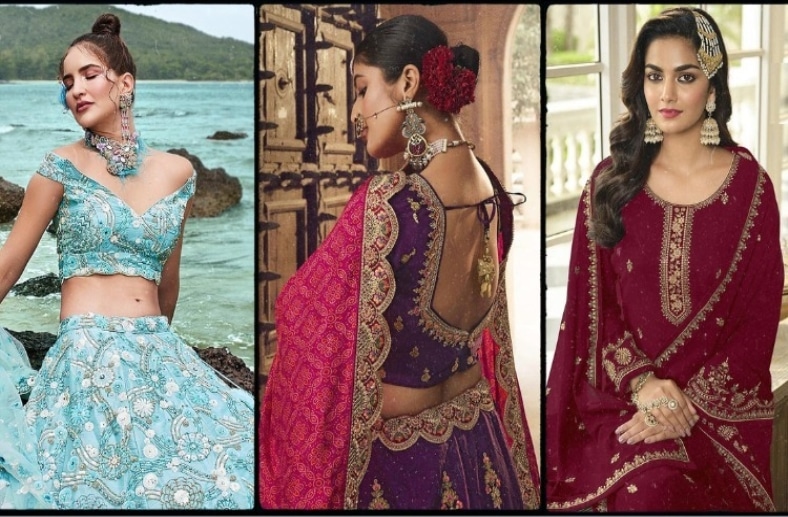
India is known around the world for a variety of wonderful reasons, one of them being Indian ethnic and traditional fashion. Be it attire or jewellery, footwear or accessories, India rocks it on the fashion meter.
Indian clothing is a vibrant tapestry of history, culture, and intricate craftsmanship. It’s not just about the attire; it represents a deep-rooted cultural heritage, rich in tradition and artistic expression. In this exploration of Indian clothing, we delve into the charm of traditional attires, the intricate designs that adorn them, and the cultural significance they carry.
Indian clothes are renowned for their diversity and richness, reflecting a deep-rooted cultural heritage. This blog delves into the intricate designs, diverse fabrics, and traditional charm that make Indian clothing a symbol of cultural pride and craftsmanship.
Let’s delve deeper and see why is it an art of elegance while exploring the Intricate designs of Indian clothing:
Intricate Fabric Designs and Techniques
The art of exploring intricate designs of Indian clothing is easy to learn. Indian fabrics are a testament to the country’s rich artistic heritage. Techniques like block printing and Dabu printing from Rajasthan, as well as Kalamkari prints, showcase the meticulous skill of Indian artisans. Each region, such as Madhya Pradesh, Rajasthan, and Gujarat, has its unique style, with Bagh prints of Madhya Pradesh being a notable example. These traditional printing methods involve using natural dyes and intricate hand-carved blocks to create patterns rich in cultural symbolism.
The Diversity of Fabrics in Indian Clothes
The variety of fabrics used in Indian clothing is staggering. Linen, made from flax plant fibres, is known for its textured appearance and moisture-wicking properties. Tissue silk, combining fine silk threads with metallic ones, exudes opulence and is often used in sarees and salwar suits for special occasions. Jute fabric, derived from the jute plant, is known for its strength and environmental friendliness. Muga silk from Assam offers a unique luxurious feel, distinct to Indian fashion.
Cultural Handwork and Embellishments
Indian clothing is often adorned with detailed handwork and embellishments. From the royal courts to modern fashion ramps, designers have kept traditional crafts like zari, beadwork, and metallic embellishments alive. These decorative elements add a layer of elegance and luxury to the garments, reflecting India’s rich textile heritage and the skills of its artisans. Stone work, zari work, resham embroidery, bead work, gota patti etc are some highly traditional elements of Indian fashion.
The Significance of Colours and Motifs
Colours in Indian clothing are not just aesthetic elements; they carry deep cultural and symbolic meanings. Green represents fertility and renewal, often worn during festivals. Blue symbolizes tranquillity and divinity, reflecting the divine presence of Lord Krishna. White signifies purity and is commonly worn in religious ceremonies. Gold, prevalent in traditional Indian jewellery and embroidery, signifies wealth and opulence. These colours, along with regional variations, play a vital role in preserving cultural identity and heritage.
The Timeless Saree
The saree is arguably one of the most iconic Indian garments, and its elegance lies in its simplicity. It’s a single piece of fabric, but the way it’s draped and the choice of fabric make all the difference. There are countless ways to drape a saree, each representing a different region or culture in India. The intricacy of the design in Indian clothes often depends on the occasion. A bridal saree, for instance, is likely to be heavily embellished, while a casual one may have more straightforward patterns.
Traditional and Contemporary Women’s Wear
Women’s wear like the Anarkali embodies timeless royalty with its flowing silhouette and detailed craftwork. Modern-day fashion sees a fusion of traditional motifs with modern silhouettes, appealing to both local and international audiences. Indian clothings’ designers are known for blending traditional styles with modern trends, keeping the essence of cultural attire while adapting to contemporary fashion needs.
Traditional and Contemporary Men’s Wear
Indian men’s fashion is equally fascinating. The sherwani, a regal long coat like attire for men, dates back to the Mughal era and is often adorned with intricate embroidery,worn for weddings and formal occasions. It’s typically adorned with embroidery and paired with churidar pants. The kurta pajama, on the other hand, is a more casual outfit but can still feature intricate designs. The choice of fabric, colour, and embroidery can turn a simple kurta into a piece of art.
Evolution and Global Influence
The traditional Indian clothing online has evolved over time, and contemporary styles have emerged that blend traditional elements with modern designs. Fusion wear, combining traditional Indian clothing with contemporary fashion, is increasingly popular. This trend reflects a global influence, as traditional Indian techniques and colours have been adopted by designers worldwide, showcasing the timeless beauty of Indian attire
In summary, Indian clothing represents a mixture of cultural heritage, artistic excellence, and evolving fashion trends. The intricate designs in Indian clothes, diverse fabrics, and cultural symbolism of Indian clothing not only tell the story of India’s rich history but also pave the way for a future where tradition meets modernity in a flawless blend.Indian fashion has always been a perfect amalgamation of culture, symbolism, tradition,well-being and spirituality, all woven together.
