

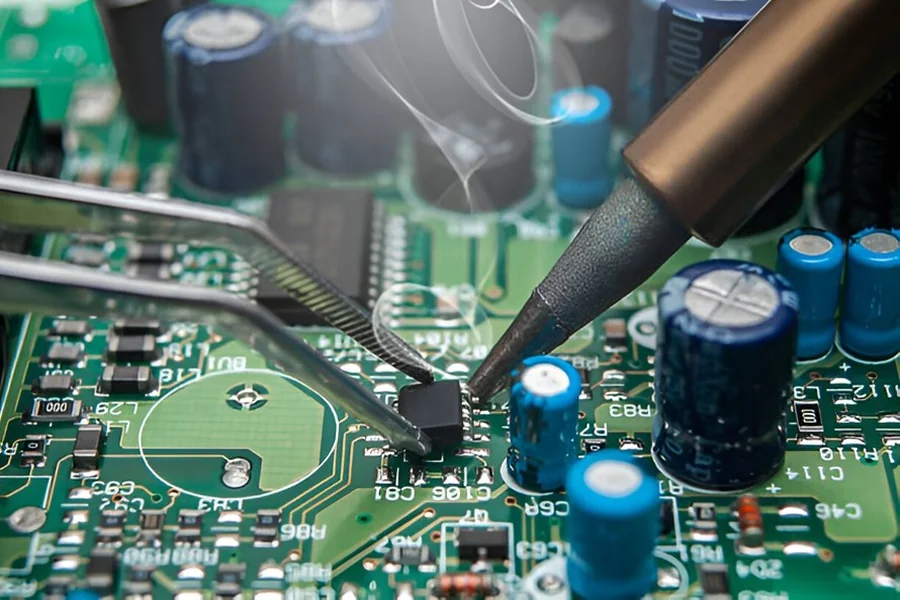
Sensor PCB boards are essential building blocks in modern electronic systems, enabling intelligent sensing, data collection, and control functionalities. These boards serve as the interface between physical environments and digital systems, allowing devices to detect temperature, pressure, humidity, motion, and more. From smartphones and wearable tech to automotive safety systems and medical diagnostics, sensor PCBs play a central role in powering innovations across various industries.
What Is a Sensor PCB Board?
A sensor PCB board is a printed circuit board specifically designed to support one or more sensors. These sensors can measure a wide range of parameters, including light, sound, distance, gas concentration, magnetic fields, and vibrations. The PCB acts as the backbone for electronic connectivity, housing both the sensor components and other circuitry required for signal processing and communication.
Unlike standard PCBs, sensor PCB boards are tailored for enhanced sensitivity, reduced noise, and high reliability. The layout and design of these boards must ensure that signals from the sensor are transmitted cleanly and without interference. Depending on the application, the board can be rigid, flexible, or even a hybrid design, making it suitable for compact and dynamic devices.
Applications of Sensor PCB Boards
Sensor PCBs are found in nearly every sector where real-time monitoring or automation is needed. In the automotive industry, they are embedded in systems such as anti-lock brakes, airbag deployment mechanisms, and engine management systems. In healthcare, sensor PCBs are integrated into diagnostic machines, wearable health trackers, and patient monitoring equipment. Industrial applications rely on them for factory automation, robotics, and predictive maintenance. Even in everyday consumer electronics, sensor PCBs enable gesture control, environmental sensing, and smart home functionality.
Each of these applications requires sensor PCB boards to function accurately under specific environmental conditions—sometimes extreme ones. This makes careful material selection and manufacturing expertise essential.
Design Considerations for Sensor PCB Boards
The design of a sensor PCB board must account for signal integrity, environmental protection, and mechanical durability. Engineers often use multi-layered PCBs to isolate power and signal lines, which reduces electromagnetic interference and improves accuracy. Shielding techniques and noise filtering components may also be added to preserve the clarity of signals collected by the sensors.
Thermal management is another critical aspect. Many sensors, especially those used in high-performance or outdoor applications, can generate or be exposed to heat. Proper heat dissipation must be factored into the board design to maintain consistent performance and prolong component lifespan.
Furthermore, miniaturization continues to be a growing trend. With the rise of IoT devices and wearables, sensor PCBs must offer high functionality in smaller footprints. This demands precision engineering and the use of high-density interconnect (HDI) technologies.
Materials Used in Sensor PCB Boards
The materials chosen for a sensor PCB board have a direct impact on its durability and accuracy. Common base materials include FR-4, polyimide, and PTFE. FR-4 is widely used for its balance of affordability and performance, while polyimide offers superior flexibility for bendable applications. PTFE and other high-frequency materials are selected when minimal signal loss and high precision are required.
Copper thickness, solder mask selection, and surface finish (such as ENIG or immersion silver) must also align with the board’s operating environment and sensor sensitivity.
Manufacturing Challenges and Solutions
Manufacturing sensor PCB boards presents several challenges. The small size and high density of modern boards increase the risk of soldering defects or component misalignment. Additionally, maintaining tight tolerances for impedance control is vital, especially in high-frequency sensing applications.
To address these challenges, it’s important to partner with an experienced PCB manufacturer who understands the intricacies of sensor-based systems. Quality assurance practices such as automated optical inspection (AOI), in-circuit testing (ICT), and X-ray inspection are essential to ensure reliable output.
Why Choose Viasion Technology Co. Ltd for Sensor PCB Boards?
When it comes to manufacturing high-quality sensor PCB boards, Viasion Technology Co. Ltd stands out as a trusted name in the industry. With extensive experience in PCB design, prototyping, and mass production, Viasion offers tailored solutions for even the most demanding sensor applications. Their commitment to precision engineering, strict quality control, and fast turnaround times make them a preferred partner for companies across automotive, medical, industrial, and consumer electronics sectors. Whether you need flexible boards for wearable tech or rigid, multi-layered PCBs for industrial sensors, Viasion Technology Co. Ltd can deliver reliable performance with every board they produce.
